
Used Dump Truck Buyer's Guide: Axles, Engines, Bodies, Hoists & Inspections
2026-10-30
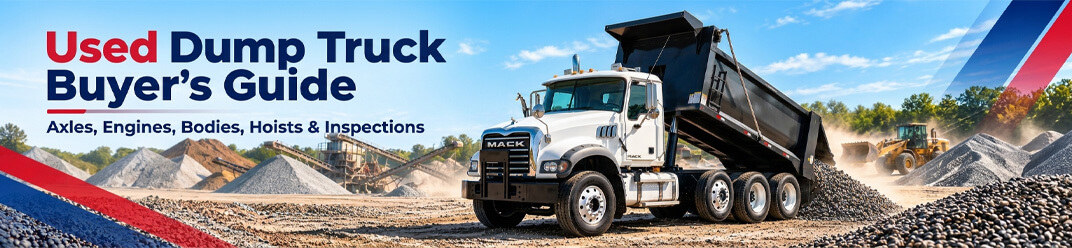
A practical guide for contractors, fleets, municipalities and equipment buyers evaluating a used vocational dump truck.
Buying a used dump truck is not simply a question of mileage and price. Axle configuration, GVWR, engine and transmission combination, dump body construction, hydraulic system and overall chassis condition determine whether the truck will perform profitably in your application.
This guide explains what to evaluate before purchasing a used dump truck and which specifications matter most for aggregate, demolition, asphalt, construction, municipal and other vocational work.
At IMPEX International Truck Sales, Inc. in Ocala, Florida, we work with contractors, fleets, dealers, municipalities, OEM partners and export buyers. Our vertically integrated approach combines vocational truck sales, dump body manufacturing, hydraulic upfitting, financing support, parts and service so customers can move from equipment need to a work-ready solution through one accountable partner.
Key Takeaways
1. Match the truck to the work: material, route, terrain and duty cycle should drive the specification.
2. Separate body volume from legal payload: axle ratings, tare weight, axle spacing and applicable laws control how much weight can be carried.
3. Inspect the complete truck, not only the engine: frame, suspension, brakes, hydraulics, dump body and mounting system all matter.
4. Choose the correct body material and hoist for the load: abrasion, impact, body length and dump angle affect long-term durability.
5. Buy documentation and support, not promises: verify the actual truck specs, inspection status, warranty eligibility and service history that are available for that unit.
What to Check Before Buying a Used Dump Truck
A properly specified dump truck should match the material you haul, the legal weight environment where you operate, the routes you run and the job sites you enter. A truck that looks inexpensive at purchase can become expensive if it is under-spec'd, overweight when loaded, poorly matched to the body or equipped with a hydraulic system that does not fit the application.
Start with the truck's documented ratings and configuration, then work outward. Confirm the chassis and axle ratings, calculate realistic payload, evaluate the powertrain, inspect the frame and suspension, verify the dump body construction, cycle the hydraulic system and confirm what inspection or warranty documentation is actually included with that truck.
GVWR, Payload and Axle Configuration
GVWR and axle configuration are the foundation of a dump truck specification. They influence legal payload potential, stability, maneuverability, tire and brake loading, and how the truck fits local bridge and axle-weight rules. The correct configuration lets you move material efficiently without assuming that body volume equals legal payload.
Tandem vs. Tri-Axle vs. Quad-Axle Dump Trucks
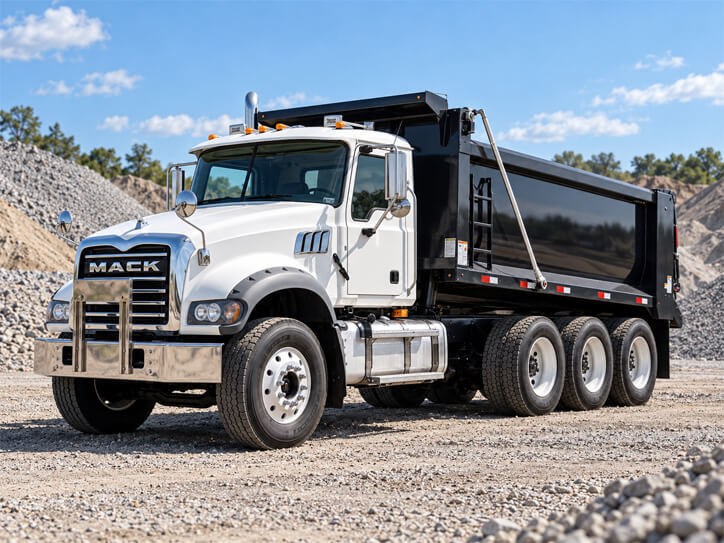
Tandem-, tri-axle and quad-axle dump trucks each make sense in different operating environments. A tandem-axle truck generally favors maneuverability and lower tare weight. A tri-axle configuration can increase legal payload potential by distributing weight across an additional axle. Quad-axle and other multi-axle configurations can provide additional weight distribution where state regulations and operating conditions support them.
Configuration
General Strength
Typical Application
Tandem axle
Maneuverability and lower tare weight
Urban construction, asphalt, lighter hauling, tighter job sites
Tri-axle
Higher legal payload potential and better weight distribution
Aggregate, demolition, heavy construction and regional hauling
Quad-axle
Maximum weight-distribution potential where permitted
High-payload applications governed by state-specific axle and bridge rules
How Lift Axles Affect Legal Payload
Pusher and tag axles can help distribute weight across additional tire contact points, but they do not automatically make every load legal. The usable benefit depends on the axle rating, steerability requirements, axle spacing, suspension setup, tire capacity and the laws that apply on the route. Always verify the truck's actual GAWR, GVWR, axle spacing and state or federal bridge requirements before establishing a payload target.
Important: Legal payload is determined by weight and applicable regulations, not by cubic-yard body capacity alone.
Engine and Transmission Selection
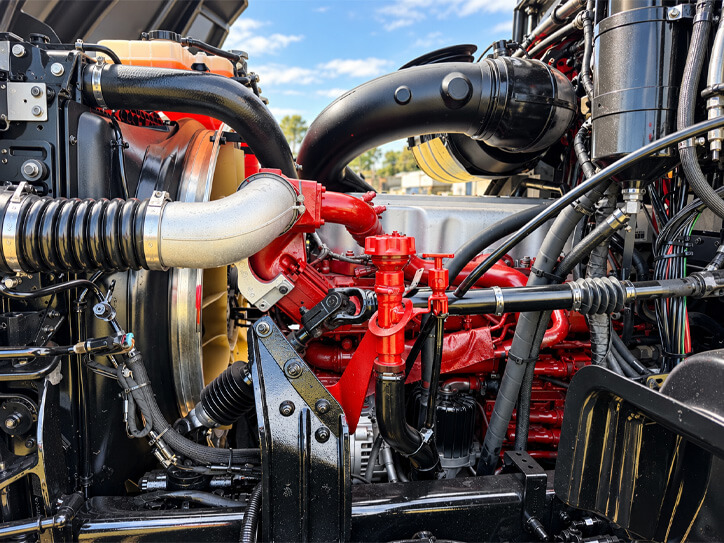
The engine and transmission should be evaluated as a matched vocational powertrain, not as separate specifications. Horsepower matters, but torque delivery, gearing, cooling capacity, route profile, gross weight and the amount of stop-and-go work usually matter more to day-to-day productivity.
Engine Power: Match Torque and Duty Cycle
Heavy-duty vocational trucks commonly use engines such as Cummins ISX/X15, Detroit DD13, Mack MP7/MP8 and PACCAR MX-series platforms. The right choice depends on the truck's weight, terrain and use. A fleet running loaded highway miles may prioritize efficiency and gearing, while a truck spending its day on construction sites benefits from strong low-speed torque, cooling capacity and a powertrain proven in vocational duty.
Automatic, Manual or Automated Manual?
Allison RDS automatic transmissions are common in dump-truck and other vocational applications because they reduce clutch work and simplify repeated low-speed maneuvering. Traditional manuals and automated manuals can also be excellent choices, especially when a fleet values direct gear control, driver familiarity or highway efficiency. Rather than selecting by preference alone, confirm the transmission model, torque rating, gearing, PTO provisions and service condition for the specific chassis.
How to Evaluate Engine Condition on a Used Truck
Ask for the maintenance and repair documentation that is actually available for the truck. Review cold-start behavior, oil and coolant condition, blow-by, visible leaks, exhaust condition, fault codes, aftertreatment status and ECM information when available. If a major repair or in-frame rebuild is represented, request the supporting invoice or documentation rather than relying on a verbal description.
A pre-purchase inspection should also include a road test under realistic operating conditions when possible. Engine power, transmission shifts, braking, steering and temperature behavior can reveal problems that are easy to miss while the truck is stationary.
Dump Body Size, Capacity and Material
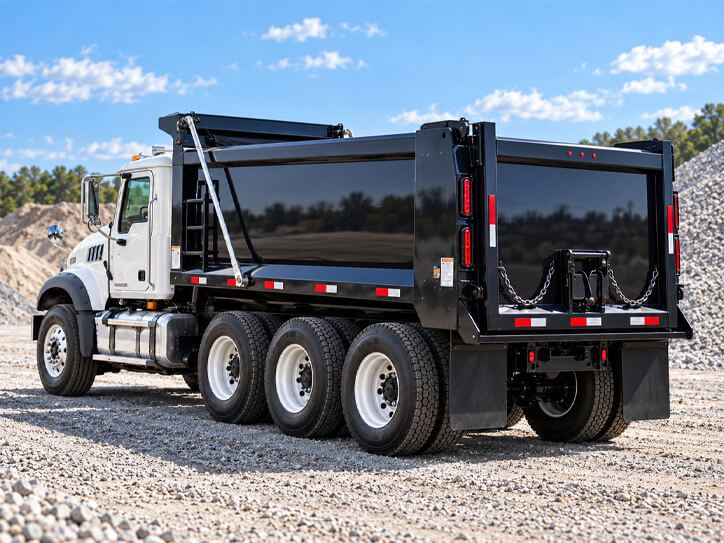
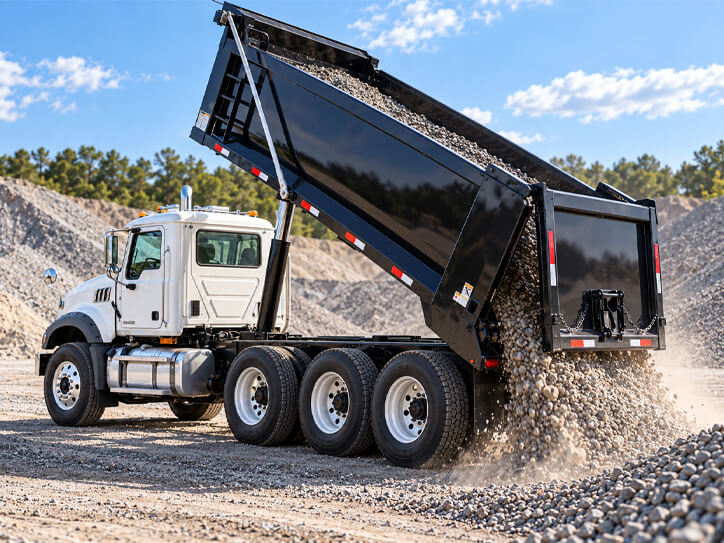
The dump body is not just a container mounted to the chassis. Body length, side height, floor and shell material, tailgate configuration, hoist geometry and body weight all affect legal payload, loading efficiency and how well the truck survives the material it carries.
Body Volume Is Not Legal Payload
Cubic-yard capacity tells you how much space is inside the body. Payload tells you how much weight the chassis can legally and safely carry. The two numbers must be evaluated separately because material density varies dramatically.
Mulch and light landscape material can fill the body before the truck reaches its legal weight limit.
Asphalt, sand and aggregate can reach the legal weight limit long before the body is full. Rock, concrete and demolition debris can create both high weight and severe impact loads, making body material and construction especially important.
Choosing Body Length and Side Height
Longer bodies and higher sides increase volumetric capacity, but they also add body weight and shift the load distribution on the chassis. The body should be selected using wheelbase, cab-to-axle, cab-to-end-of-frame, rear overhang, axle ratings and the intended material. A larger body is only productive when the chassis can carry the resulting load legally and the hoist geometry is correct.
For reference, a 16-ft semi-elliptical body with approximately 56-in. sides can be around the 22-cubic-yard range depending on the exact body geometry. That volume should never be treated as a legal payload rating.
AR450, A36 and Aluminum: Choosing the Right Body Material
Steel grade and thickness should match the abrasion and impact level of the material. AR450 abrasion-resistant steel is commonly selected for severe wear areas, while structural mild steel such as A36 can be a cost-effective shell material for less abrasive applications. Aluminum reduces tare weight, which can improve payload potential for lighter materials, but it is not the right answer for every severe-impact application.
Body / Material
Floor
Shell
Best Fit
Bulldog BRAWLER
1/4 in. VALAST AR450
1/4 in. VALAST AR450
Demolition, rip-rap, concrete, scrap and maximum abrasion
Bulldog BRUISER
1/4 in. VALAST AR450
3/16 in. VALAST AR450
Severe-duty aggregate, abrasive material and heavy construction
Bulldog GRIT
1/4 in. VALAST AR450
3/16 in. ASTM A36
Heavy-duty everyday hauling where cost, durability and payload efficiency must balance
Aluminum body
Varies by design
Aluminum
Lighter materials where lower tare weight is a priority
Hydraulic Hoists, PTOs and Dump Pumps
The hydraulic system must be matched to the body and chassis. A properly selected hoist needs sufficient lifting capacity, correct mounting geometry, the right dump angle and a compatible PTO and pump. A truck can have a strong engine and body and still be a poor purchase if the hoist installation is undersized, leaking or incorrectly matched.
Front-Mounted Telescopic Hoists
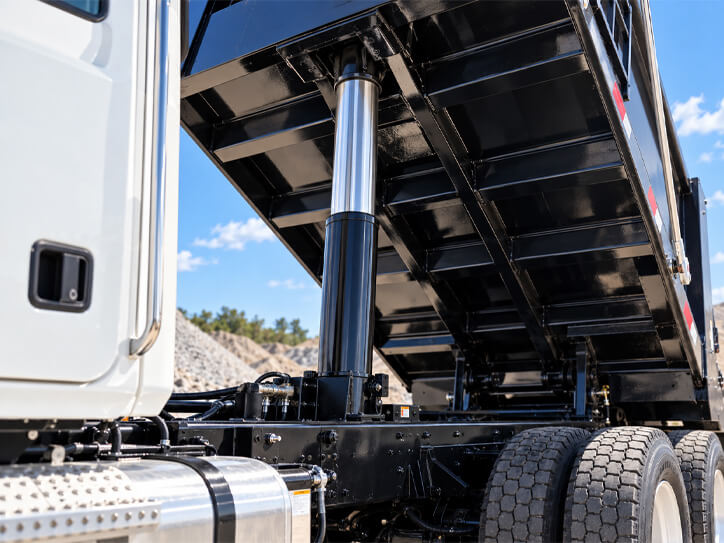
Front-mounted telescopic cylinders are common on heavy-duty dump trucks because they provide a direct lifting arrangement and strong performance across long dump bodies. The correct cylinder is selected based on body length, required lift, load, mounting height and chassis geometry. Stage count or stroke length alone is not enough to determine whether a cylinder is appropriate.
Underbody Scissor Hoists
Underbody scissor hoists can provide a compact alternative where body design, available mounting space and dump geometry make them appropriate. They are common in certain medium-duty and shorter-body applications. As with a telescopic hoist, the installation should be evaluated for rated capacity, geometry, mounting condition and evidence of twisting or structural stress.
PTO and Dump Pump Matching
Confirm that the PTO is compatible with the transmission and that the pump provides the required flow and pressure for the hoist. Inspect the hydraulic reservoir, hoses, fittings, valves and cylinder for leaks, heat damage, contamination or poor routing. Cycle the body through a complete raise-and-lower sequence and verify that the tailgate, tarp and any high-lift system operate correctly.
10-Point Used Dump Truck Inspection Checklist
A commercial dump truck should be inspected as a complete vocational system. The following ten areas deserve attention before a purchase decision is made:
No.
Inspection Area
What to Check
1
Frame andcrossmembers
Check rails, crossmembers, body mounts, suspension attachment points and repaired areas for cracks, distortion, corrosion or poor weld repairs.
2
Front and rear suspension
Inspect springs, airbags, walking beams, trunnions, torque rods, bushings, U-bolts and lift-axle components for wear or looseness.
3
Steering system
Check steering gear, tie rods, kingpins and linkage for excessive play, leaks or uneven tire wear that may indicate alignment problems.
4
Engine and cooling
Evaluate cold start, blow-by, leaks, oil and coolant condition, fault codes, aftertreatment status and operating temperature.
5
Transmission and driveline
Verify shift quality, clutch operation where applicable, PTO function, driveshafts, carrier bearings, U-joints and differential condition.
6
Brakes, tires and wheels
Measure brake condition, inspect air system operation, confirm tire condition and ratings, and look for mismatched tires or wheel damage.
7
Hydraulic system
Inspect PTO, pump, tank, hoses, valves and cylinder; cycle the body fully and check for leaks, chatter, excessive heat or slow operation.
8
Dump body structure
Inspect the floor, sides, bulkhead, tailgate, top rails, hinges, latch system, long sills, welds and high-wear areas for cracking or deformation.
9
Electrical and safety equipment
Test lights, strobes, backup alarm, tarp system, trailer connections and other installed vocational equipment.
10
Documentation and road test
Confirm VIN, GVWR/GAWR, service records when available, inspection documentation, title status and warranty eligibility; complete a road test when possible.
What a Work-Ready Used Dump Truck Should Include
A work-ready truck should arrive with its actual specifications documented and its major operating systems verified. That includes the chassis ratings, suspension configuration, dump body, hoist, PTO and pump, lighting and safety equipment, and any inspection documentation represented in the sale.
For trucks advertised with a certified DOT inspection, ask to review the inspection documentation and date. For trucks advertised with warranty coverage, confirm the provider, covered components, term, deductible and eligibility for the specific unit. At IMPEX, qualifying retail Class 8 trucks may include a 6-month Premium 2000 warranty covering the engine, critical components, transmission and rear differentials, subject to program terms and vehicle eligibility.
The goal is straightforward: the condition, documentation and configuration delivered should match what was represented before the truck leaves the dealership.
Why Buy a Used Dump Truck From IMPEX?
IMPEX International Truck Sales has served the heavy-duty and vocational truck market from Ocala, Florida since 1994. Our approach is different from a dealership that only sells the chassis. We combine truck sourcing and sales with in-house body manufacturing and complete vocational upfitting capabilities.
IMPEX International Truck Sales
We source and sell vocational trucks for contractors, fleets, dealers, municipalities and export buyers, with financing support and a focus on work-ready applications.
Bulldog Bodies
Bulldog Bodies manufactures steel dump bodies and containers in Ocala, including semi-elliptical BRAWLER, BRUISER and GRIT configurations using VALAST AR450 and structural steel selected for the intended duty cycle.
Truck Upfitting and Hydraulic Integration
Our upfitting operation integrates dump bodies, hoists, PTOs, dump pumps, hydraulic tanks, tarps, high-lift systems, lighting, hitch packages and related vocational equipment so the chassis and body can be engineered as one system.
The result: one accountable partner from chassis selection through fabrication, hydraulic installation, final inspection and delivery.
Frequently Asked Questions
What is the difference between a tandem-axle and tri-axle dump truck?
A tandem-axle dump truck generally offers lower tare weight and better maneuverability. A tri-axle adds another axle to distribute weight, which can increase legal payload potential depending on axle ratings, spacing and state rules. The right choice depends on material, route, job-site conditions and local weight regulations.
How many cubic yards can a tri-axle dump truck carry?
There is no single tri-axle cubic-yard number. Body size determines volume, while the truck's legal payload is determined by weight. A large body may be appropriate for lighter material, but dense aggregate or demolition debris can reach the truck's legal weight limit before the body is full.
What is AR450 steel and why is it used in dump bodies?
AR450 is an abrasion-resistant steel grade designed to withstand sliding wear and impact better than conventional mild steel in demanding applications. It is commonly used in dump-body floors and, on severe-duty designs, the sides, bulkhead and tailgate. Thickness and steel grade should be selected for the material being hauled rather than by steel hardness alone.
Is an automatic transmission better for a dump truck?
An automatic can be an excellent choice for repeated stop-and-go vocational work and job-site maneuvering, but it is not automatically the best option for every fleet. Confirm the transmission model, rating, gearing, PTO compatibility and service condition, then match the powertrain to the route and duty cycle.
What should I inspect first on a used dump truck?
Start with the frame and structural condition, then verify the chassis ratings, suspension,brakes, tires, engine, transmission and driveline. After that, inspect the dump body and fully cycle the hydraulic system. Structural cracks, poor repairs and hydraulic problems can be much more expensive than cosmetic defects.
Can IMPEX install a new dump body or hydraulic system on a used chassis?
Yes. IMPEX's vertically integrated operation supports chassis sourcing, Bulldog Bodies dump-body manufacturing and complete vocational upfitting. The body, hoist, PTO, pump and related equipment can be selected around the chassis measurements, ratings and intended application.
Find Your Next Work-Ready Dump Truck
The right used dump truck starts with the right specification, not simply the lowest purchase price. Match the chassis, axle configuration, powertrain, body and hydraulic system to the work you actually perform, then verify the condition and documentation of the complete truck before purchasing.
IMPEX International Truck Sales can help you evaluate available trucks, body configurations and upfitting options for your application.
Call us now for any questions or to check truck availability - (352) 351-3323
Heavy-Duty / Vocational Truck Sales - IMPEX International Truck Sales, Inc.: https://impextrucksusa.com/
Custom Steel Body Manufacturing - BULLDOG Bodies, LLC: https://bulldogbodies.net/
Professional Truck Up-Fitting Services - DIESEL-TECH & Bodyworks, LLC: https://www.centralflupfitters.com/